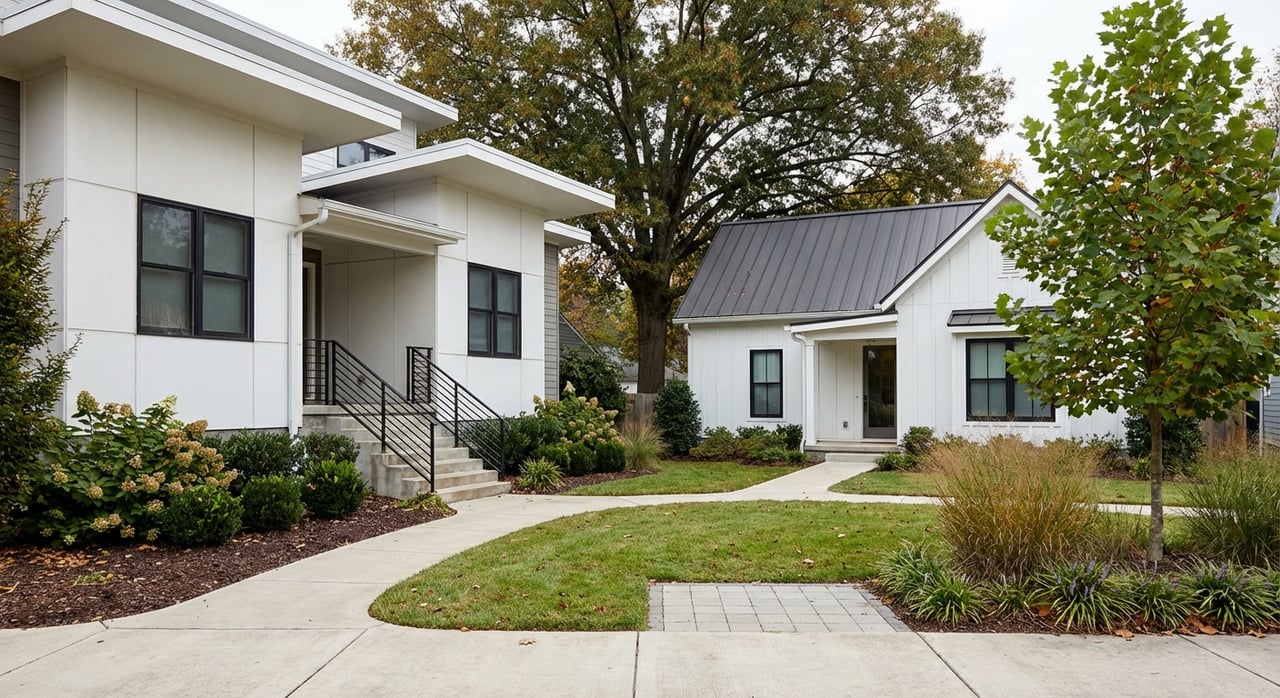
Trying to choose between a townhome and a single-family house in Canton can feel like comparing apples to oranges. You want the right mix of space, maintenance, lifestyle, and monthly cost without second-guessing yourself later. In this guide, you’ll get a clear, local framework to compare options in Canton so you can decide with confidence. Let’s dive in.
Canton market at a glance
Home prices in Canton vary by data source and neighborhood. Some sources show a typical home value around the low to mid $500s, while median listing prices often read higher. The key takeaway is simple: use broad city numbers as context, then compare the exact property type and neighborhood you want. Days on market range by source too, and different methods can show 50 to 75 days as a median. The most accurate read will always come from current, property-specific comps.
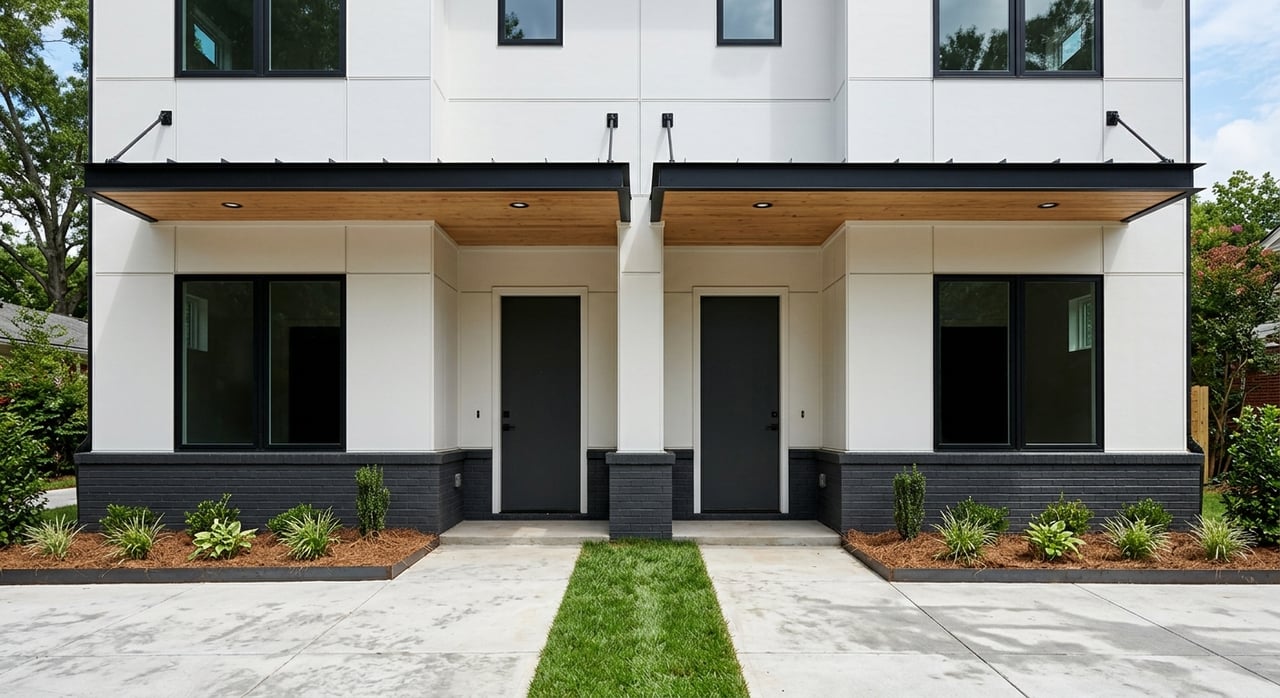
If you are deciding between an attached townhome and a detached house, expect townhomes to cluster at lower price points than single-family homes in the same master-planned areas, with notable exceptions for new or amenity-heavy builds.
Lifestyle fit: townhome vs. house
Maintenance and time
Townhomes often sit inside HOAs that handle shared areas and some exterior items. Many communities include landscaping and common-area upkeep, and some cover exterior repairs, though coverage always depends on the governing documents. Review what the HOA actually covers before you count on it for roofs or paint. Guidance on typical HOA coverage and owner responsibilities is summarized in resources like Nolo’s comparison of HOA fees and scope.
With single-family homes, you typically own and maintain the entire structure and lot. A common planning rule is to budget about 1 percent of the home’s value per year for maintenance, with a real-world range of 1 to 4 percent depending on age and condition. That rule of thumb, outlined by SuperMoney’s maintenance guide, is a helpful starting point for monthly cost comparisons.
Space, privacy, and yard
Townhomes trade private yard size for convenience and shared amenities. You may see very small lot footprints for attached units in Canton master-planned neighborhoods, while nearby detached homes in the same community sit on larger lots with more separation. If you value outdoor projects, play space, or future additions, a detached house offers more control, subject to local covenants and approvals.
Parking and storage
Most townhomes provide one or two garage spaces. Guest parking can be limited, and some associations set street-parking rules. Single-family homes typically offer larger driveways, more garage storage, and easier visitor parking on your own lot. Always check a specific property’s features and the HOA’s parking rules.
Amenities and neighborhood feel
Attached options in Canton often live inside amenity-rich, master-planned settings with pools, trails, and clubhouses. That setup can deliver a lock-and-leave lifestyle with community perks. Detached homes can be inside or outside HOAs, and they usually give you more freedom to personalize outdoor spaces.
Monthly cost: a simple Canton comparison
When you compare a specific townhome with a specific house, focus on recurring items you will actually pay each month:
- Property taxes, estimated with Cherokee County’s assessment and millage rules
- HOA dues, what they include, and any planned increases
- Routine maintenance, using the 1 percent rule as a planning tool
- Insurance differences and your loan payment
Cherokee County commonly assesses at 40 percent of fair market value and applies the local millage to that number. You can review how the county calculates bills on the Cherokee County Tax Commissioner’s site.
Here is an illustrative comparison using the county’s 26.251 mills example for unincorporated areas, excluding mortgage and insurance for clarity:
- Townhome example: fair market value $350,000, assessed $140,000, estimated property tax about $3,675 per year (about $306 per month), plus HOA around $200 per month, plus maintenance using the 1 percent rule about $3,500 per year (about $292 per month). Rough subtotal: about $798 per month for tax, HOA, and maintenance.
- Single-family example: fair market value $550,000, assessed $220,000, estimated property tax about $5,775 per year (about $481 per month), plus maintenance using the 1 percent rule about $5,500 per year (about $458 per month). Rough subtotal: about $940 per month for tax and maintenance.
Your actual costs will vary with location, exemptions, HOA scope, home age, and property condition. The exercise shows how HOA dues and lower assessed value can shift the math, and why the exact HOA coverage matters.
HOAs: structure, fees, and what to check
What the fees cover
Townhome and condo-style HOAs in metro Atlanta can range from low hundreds per month for simpler communities to several hundreds when amenities and exterior coverage are robust. Never assume roofs, siding, or exterior paint are included. Confirm the billing cycle and line items, and use Nolo’s HOA fee overview as a guide to common splits. In Georgia, some associations adopt the Property Owners’ Association Act, which can affect collection remedies and powers. You can read an overview of the POAA at Condo Control.
Financial health and red flags
Ask for the current budget, reserve study or schedule, recent financials, meeting minutes, and the history of special assessments. Red flags include very low reserves relative to needs, more than 10 to 15 percent owner delinquency, frequent special assessments, pending litigation, and master insurance gaps or very high deductibles. For background on reserve studies and funding standards, see Reserve Studies Inc.’s FAQs and ReserveStudy.com’s guide.
Insurance and financing checkpoints
Insurance responsibilities differ by legal structure. Condo associations often carry a master policy for the building exterior and common elements, while owners carry HO-6 policies for interiors and loss-assessment coverage. Single-family owners usually carry full dwelling coverage similar to an HO-3. Review what the master policy covers, the deductible, and any loss-assessment requirements. A plain-English summary of these differences appears in Nolo’s HOA insurance discussion.
Financing can also differ. If a townhome is legally a condominium, some loan programs require project approval. FHA offers project-wide or single-unit approval in certain cases. If you plan to use FHA or VA, check project status early using HUD’s condominium search tool and ask your lender how the property will be classified.
Neighborhoods and daily logistics
Popular Canton communities that feature both attached and detached options include River Green, Bridgemill, Great Sky, and Prominence. Medians and amenities vary by neighborhood, so match your lifestyle priorities to the right community mix.
Schools are served by Cherokee County Schools. Some area schools receive higher scores on third-party sites, and those metrics can influence demand. For a neutral reference point, you can review a local example such as Macedonia Elementary’s GreatSchools page. Always use multiple sources and visit schools directly to form your own view.
Canton sits about 40 to 45 miles northwest of downtown Atlanta, with typical drive times of roughly 45 to 75 minutes depending on traffic and route. You can find a simple distance and drive-time overview on Atlanta.com’s Canton FAQ.
Finally, check site-specific risk. Parts of Canton are near the Etowah River and creeks, and some parcels can lie inside FEMA flood zones. Before you assume risk is low, review FEMA flood maps, county GIS, and any elevation certificates, especially if you are comparing a townhome cluster near a stream to a house on higher ground. Lenders may require flood insurance for Special Flood Hazard Areas.
Quick decision snapshot
- Low maintenance, lock-and-leave lifestyle, smaller budget, or value community amenities, consider a townhome, then verify HOA coverage and financial health.
- Privacy, yard space, outdoor projects, or long-term land control, consider a single-family house, and budget more for exterior upkeep and taxes.
- Need FHA or VA financing, prefer a simpler lender path, favor fee-simple single-family or confirm attached project approval early with HUD’s tool.
How to compare two Canton properties in 30 minutes
Use this checklist to compare a townhome and a house side by side:
- Legal structure and financing
- Confirm whether the property is fee-simple, a condominium, or part of a master association. A quick primer on definitions appears in Turbohome’s condo vs. townhome glossary. If you plan FHA or VA, check project approval with HUD’s lookup and ask your lender how the unit will be classified.
- HOA documents and coverage
- Request the resale package: bylaws, CC&Rs, budget, reserve study or schedule, financials, minutes, and any litigation disclosures. See Nolo’s HOA document guide.
- Verify who maintains roofs, siding, gutters, decks, driveways, fences, and shared utilities. The plats and CC&Rs control this split.
- Fees, taxes, and monthly math
- List HOA dues, billing cycle, and what they include. Note any planned increases.
- Estimate property taxes using assessment rules from the Cherokee County Tax Commissioner.
- Add a maintenance allowance using the 1 percent rule and adjust if the HOA covers major exterior items.
- Insurance scope
- Ask for the master policy declarations page, coverage scope, and deductible. Confirm whether loss-assessment coverage is required on your HO-6. See Nolo’s insurance overview for typical splits.
- Site and lifestyle
- Check FEMA flood maps and county GIS for flood zones. Review commute time expectations and parking rules. Walk the amenities and consider noise, privacy, and guest parking.
- HOA financial health
- Review reserves, special assessments history, and delinquency rates. Background standards are summarized in Reserve Studies Inc.’s FAQs and ReserveStudy.com’s guide.
Ready to decide with confidence?
You do not have to guess. Bring one or two properties you like, and we will build a head-to-head Canton comparison that covers HOA scope, taxes, maintenance, and lifestyle fit. To get started, book a quick consult with Adrienne Freeman and let’s map your best next move.
FAQs
What should I budget for home maintenance in Canton?
- A common starting point is about 1 percent of the home’s value per year, with a range of 1 to 4 percent based on age and condition, as outlined in SuperMoney’s guidance.
How do Cherokee County property taxes work for buyers?
- The county commonly assesses at 40 percent of fair market value, then applies the local millage to that number, which you can review on the Cherokee County Tax Commissioner’s website.
Do townhome HOAs in Canton usually cover roofs and exterior paint?
- Sometimes, but not always, so you should read the CC&Rs and budget documents to confirm exactly what is included before you rely on HOA coverage.
Can I use FHA or VA financing on a Canton townhome?
- Yes in many cases, but if the townhome is legally a condominium the project may need FHA or VA approval, so check the HUD condo lookup early with your lender.
Which offers more privacy in Canton, a townhome or a house?
- A single-family house typically provides more yard space and separation, while townhomes trade private outdoor area for convenience and amenities inside master-planned communities.
How can I spot HOA red flags before I buy?
- Look for low reserves, frequent special assessments, high owner delinquency, pending litigation, and insurance gaps or very high deductibles in the association’s documents.